Mechanical Keyboards in 2026: What's Actually Changed (And What Hasn't)
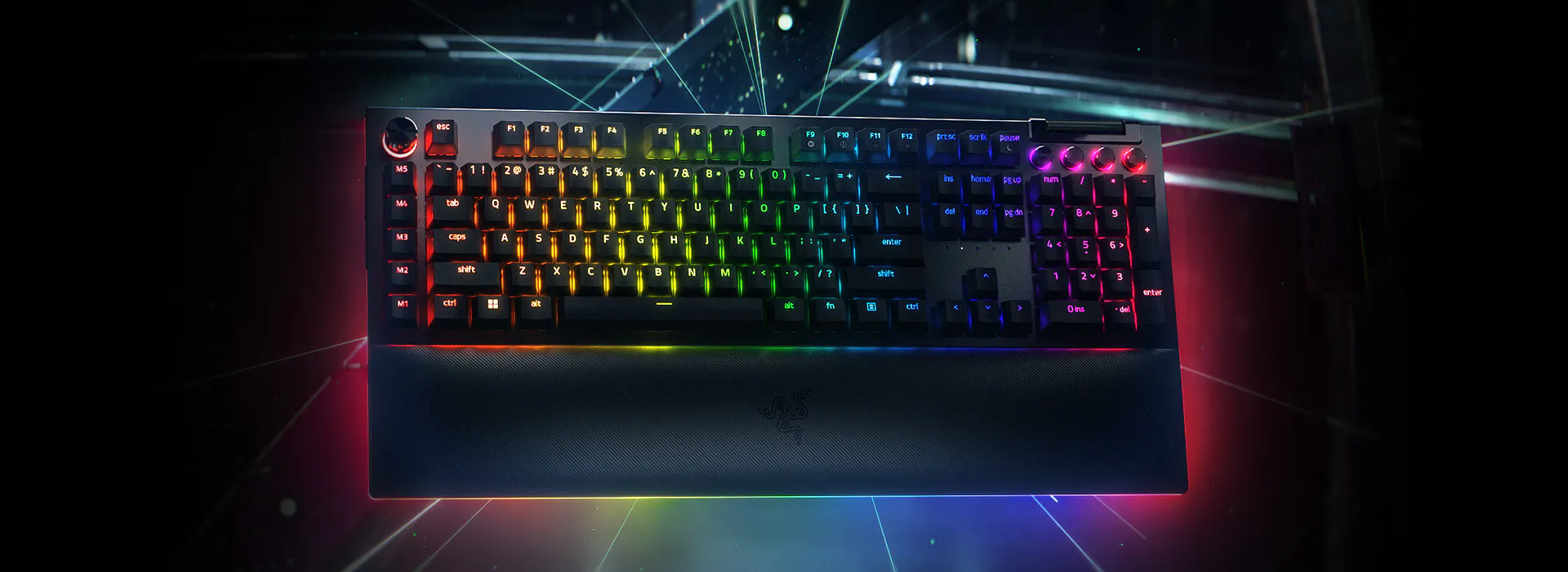
Walk into any conversation about desk peripherals in 2026 and mechanical keyboards still dominate it, but the reasons people buy them have quietly shifted. Five years ago the pitch was almost entirely about gaming: faster actuation, n-key rollover, RGB. Today the loudest growth is coming from people who never touch a competitive shooter — writers, developers, and remote workers who simply got tired of mushy laptop keyboards and cheap membrane boards that felt the same on day one as they did worn out on day 900. Here's what has actually changed in the category this year, and what is mostly repackaged marketing.
Hot-swappable switches went from enthusiast niche to standard feature
The single biggest real shift is how casually manufacturers now include hot-swappable switch sockets on boards that aren't explicitly marketed as DIY enthusiast kits. The Razer BlackWidow V4 Pro is a good example of a mainstream gaming board that ships with genuinely useful extras — a command dial, dedicated macro keys, doubleshot PBT keycaps on some SKUs — aimed squarely at people who want a premium mechanical keyboard without assembling one from parts. That a board this mainstream now treats build quality and keycap material as a headline feature, rather than something only boutique brands cared about, says a lot about where buyer expectations have moved.
Hybrid boards are quietly eating the low-travel niche
Not every keyboard release this year chased maximum tactile feedback. The Logitech G15 Gaming Keyboard (2nd Gen) is a useful reminder that hybrid mechanical-membrane designs never actually disappeared — they just got better integrated screens and macro systems. Its onboard LCD panel for stats, media control, and macro feedback is the kind of feature that used to be a gimmick bolted onto a board as an afterthought; on this generation it's tied more tightly into game and productivity software, which is a genuinely useful improvement rather than a cosmetic one.
Gaming keyboard marketing vs. desk-setup reality
The category's marketing language still leans heavily on esports credentials — actuation speed measured in fractions of a millisecond, rollover counts that matter only in extremely fast competitive titles. For the much larger audience actually buying these boards for a desk setup that mixes work and play, the specs that matter more day to day are typing comfort over an eight-hour shift, keycap material that resists shine, and whether the board has a stable, non-mushy typing feel for long documents and emails. A membrane vs. mechanical comparison is still the right starting point for anyone unsure which category actually fits how they use a keyboard, rather than jumping straight to whichever board has the flashiest spec sheet.
Wireless mechanical keyboards are no longer a compromise
Latency used to be the real argument against wireless mechanical boards for anything competitive. That gap has narrowed enough in 2026 that most people outside of professional esports genuinely cannot feel the difference between a good 2.4GHz wireless connection and a wired one, which has pushed more buyers toward wireless as the default rather than the compromise pick. The practical upside for a crowded desk is less obvious than raw latency numbers but arguably more valuable day to day: one less cable competing for space around a monitor arm, a productivity mouse, and whatever docking station is feeding a multi-monitor setup.
What hasn't actually changed
A few things that get relabeled as "new" every year are really just the same ideas with fresh branding. Per-key RGB lighting has been broadly available since the mid-2010s and remains mostly cosmetic — genuinely useful for typing in low light, largely irrelevant to how a board actually feels to use. Claims about actuation speed differences below roughly one millisecond are, for the overwhelming majority of buyers, not perceptible in normal use, gaming included. And "gaming" branding on a keyboard tells you very little about long-session typing comfort, which depends far more on keycap profile, switch weighting, and whether the board has a stable, low-flex case.
Switch types: a quick refresher for the confused
For anyone shopping a first mechanical board in 2026, the switch-type landscape is simpler than the marketing makes it sound. Linear switches (smooth, no tactile bump, generally quiet-ish) suit fast typists and gamers who don't want feedback interrupting rapid key presses. Tactile switches add a small bump partway through the keystroke, useful for typing accuracy without the audible click of a clicky switch. Clicky switches add both the bump and an audible click — satisfying for some, genuinely disruptive in a shared office or open-plan home. None of these categories is objectively "the gaming switch" or "the productivity switch" despite how they're frequently marketed; the right choice depends entirely on personal feel preference and how much noise your environment can tolerate.
Keycap material matters more than most buyers realize
Doubleshot PBT keycaps resist the shine and wear that cheaper ABS caps develop within months of daily use, and the difference becomes obvious on any board used for eight-plus hours a day. It's a detail easy to overlook when comparing spec sheets dominated by switch actuation numbers, but for anyone keeping a keyboard for several years rather than upgrading annually, keycap material is arguably a better predictor of how the board will feel and look a year from now than any raw performance spec.
Budget doesn't mean disposable anymore
Another real shift worth calling out: the floor for build quality has risen across the whole price range, not just at the top. A few years ago, a budget mechanical board reliably meant a flexy plastic case, mediocre stabilizers that rattled on the larger keys, and switches that felt noticeably worse than anything in the mid-range. That gap has narrowed considerably. Stabilizer quality in particular — the small plastic bars under space bar, shift, and enter keys that prevent wobble — used to be the most reliable way to tell a cheap board from a good one just by typing on it, and mid-range boards now ship with factory-lubed stabilizers that would have been a boutique-only feature not long ago. For anyone shopping on a tighter keyboard budget, that means it's genuinely possible to get a stable, long-lasting daily driver without spending flagship money, as long as you check for hot-swap sockets and PBT caps rather than assuming price alone tells the whole story.
The bottom line for 2026 buyers
If you're upgrading a keyboard this year, the genuinely useful trends to prioritize are hot-swappable switch sockets (so a bad switch choice or a worn switch doesn't mean replacing the whole board), PBT keycaps for long-term durability, and a wireless connection good enough that the cable isn't a foregone conclusion anymore. The trends worth ignoring are marginal actuation-speed claims and RGB lighting schemes marketed as functional upgrades when they're really just aesthetic ones. Whether that lands you on a dedicated gaming board like the BlackWidow V4 Pro or a hybrid productivity-leaning option like the G15, the fundamentals of what makes a keyboard good for daily use have stayed remarkably stable even as the marketing around them keeps changing.