OLED Monitor Burn-In in 2026: Separating Fact From Fear
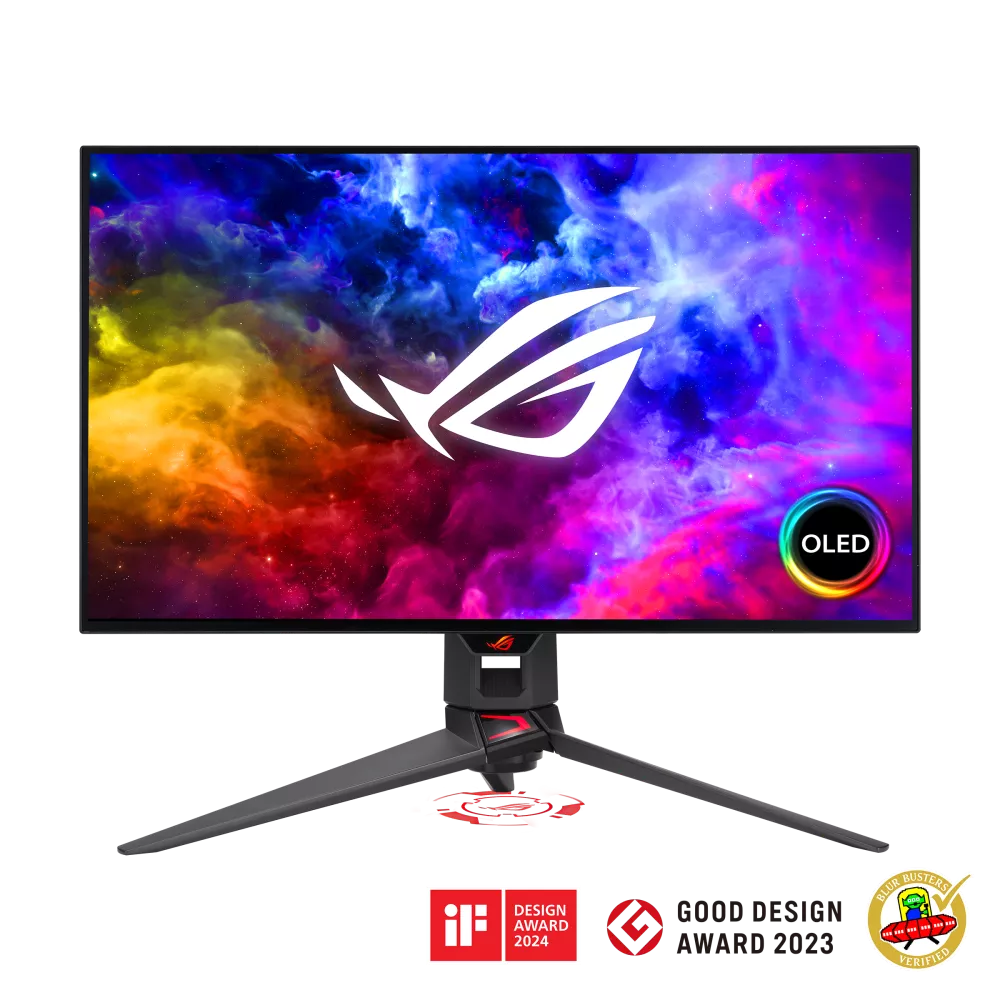
Burn-in remains, in 2026, the single biggest reason a segment of buyers still hesitates to move to an OLED monitor despite picture quality that's objectively superior to LCD panels in nearly every measurable way. The question deserves a straight answer: is that fear still justified on current-generation OLED panels, or is it a reputation carried over from a technology that has moved on considerably since it first appeared?
What burn-in actually is
Burn-in, or permanent image retention, happens when OLED pixels displaying the same static content for extended periods wear unevenly compared to neighboring pixels, leaving a faint ghost image visible even after the content changes. Contrary to how it's often described, it isn't a binary event that suddenly appears — it's a gradual, cumulative degradation that typically requires hundreds or even thousands of hours of the same static element being displayed before it becomes visible to the naked eye in normal use.
Built-in protections have improved substantially
Modern OLED monitors, including the ASUS ROG Swift OLED PG27AQDM, now ship with several active protection mechanisms: imperceptible pixel shifting that nudges the displayed image slightly at regular intervals to spread wear evenly, automatic panel refresh cycles that run during idle periods to even out pixel brightness, and automatic dimming on static interface elements like taskbars or persistent logos. Combined, these protections dramatically reduce real-world risk compared to the earliest generations of consumer OLED panels, where none of this tooling existed yet.
Which use cases are actually at risk
Burn-in risk isn't uniform across use cases. Gaming with fixed HUD elements displayed continuously during very long, repeated sessions — a health bar, a minimap, a timer parked in a corner of the screen — represents the highest-exposure scenario, particularly when the same game runs daily for months on end. By contrast, mixed use spanning web browsing, video content, and different games naturally distributes what's displayed and substantially reduces the cumulative exposure of any single region of the panel.
Warranty coverage as a real signal
A more telling indicator than any marketing explanation: the length and terms of burn-in-specific warranty coverage manufacturers are actually willing to offer. Several OLED gaming monitor makers now provide explicit burn-in warranty coverage running two to three years, a commitment that would have been unthinkable on the earliest consumer OLED panel generations. That contractual commitment reflects the industry's real confidence in current panel reliability far more directly than any promotional claim on a spec sheet.
Practical habits that reduce the risk further
A handful of simple habits reduce an already-low risk even further: avoiding leaving fully static content displayed at full brightness for hours without interruption, keeping built-in panel protection features enabled rather than disabling them for a marginal perceived responsiveness gain, and varying displayed content rather than using the screen exclusively for one game or one application with a fixed interface. None of these habits are burdensome day to day, but cumulatively they meaningfully reduce exposure over the panel's practical lifespan.
Verdict: a real risk, but a well-managed one
Burn-in isn't a complete myth — it's a genuine physical phenomenon inherent to OLED technology — but presenting it as an inevitability for every 2026 buyer is a clear exaggeration at this point. For mixed gaming use with protections enabled, the practical risk over a monitor's realistic ownership lifespan is low, and the contrast and response-time gains OLED delivers justify that residual risk for most gamers weighing the tradeoff. Anyone still undecided between panel types should also read our monitor buying guide and our dedicated Mini-LED alternative review for a direct comparison of what each panel technology trades off against the other.
What independent longevity testing actually shows
Beyond manufacturer warranty terms, several independent testing labs now publish accelerated aging protocols specifically designed to quantify burn-in risk on consumer OLED panels, compressing thousands of hours of static content exposure into weeks of continuous testing. Those results, while run under deliberately harsher conditions than typical real-world use, generally converge on the same conclusion: current-generation OLED panels require exposure far beyond normal household use before perceptible retention appears — a finding that lines up directly with the warranty terms manufacturers themselves are now willing to put in writing.
OLED vs. Mini-LED: partly a risk-tolerance decision
For buyers still hesitant despite these protections, Mini-LED technology remains a legitimate alternative that structurally eliminates burn-in risk entirely while delivering contrast very close to OLED on the best current models, at the cost of slightly slower response times and occasional blooming visible around high-contrast areas. The final choice ultimately comes down as much to personal risk tolerance as to a purely technical preference between the two approaches.
The one scenario where the caution still applies
One scenario deserves a specific callout: OLED monitors used as a fixed secondary display for continuous monitoring — dashboards, surveillance feeds, trading interfaces displayed all day, every day. That's precisely the kind of use case that most closely resembles accelerated lab testing conditions, and it's also the one scenario where a Mini-LED or standard IPS panel remains the objectively safer choice today, independent of how far anti-burn-in protections have come. For gaming or mixed office use, though, that caveat barely applies anymore.
The practical takeaway before buying
The short version: confirm the model you're considering actually ships with the active anti-burn-in protections described above, favor a model backed by an explicit burn-in warranty where possible, and avoid using an OLED monitor as a permanently static display showing the exact same content without variation. For everything else — gaming, browsing, video content, creative work — the technology has matured enough that burn-in anxiety is no longer a good reason to pass up OLED's biggest advantage: a level of contrast and image depth that no LCD panel fully matches yet.
For anyone shopping across the wider monitor category rather than OLED specifically, it's worth comparing this tradeoff directly against a high-refresh IPS panel as well, since panel technology is only one variable among several — refresh rate, resolution, and screen size all interact with the burn-in question in ways a single spec sheet rarely makes obvious at a glance.