Razer Razer BlackShark V2 X
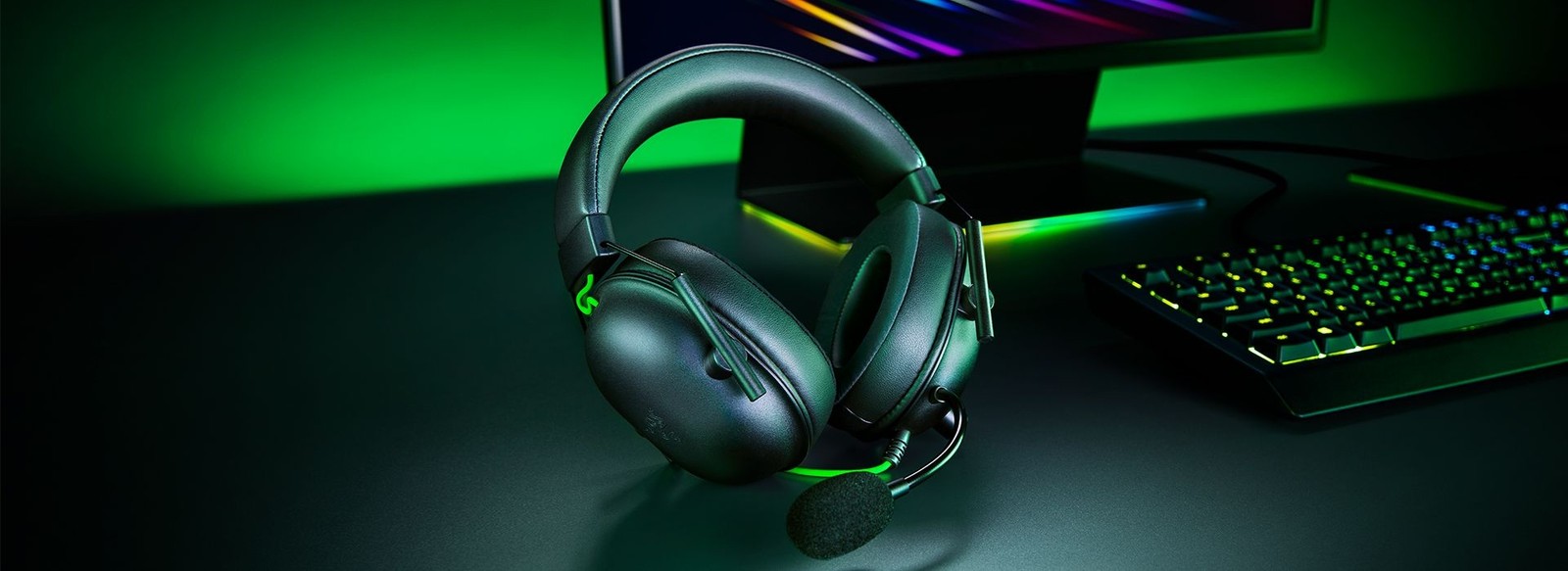
A lightweight wired esports headset with 50 mm Razer TriForce drivers, a HyperClear cardioid microphone, closed-back passive noise cancellation, memory foam cushions, a 3.5 mm connection and 240 g of weight.
Specifications
| Drivers | Razer TriForce 50 mm |
|---|---|
| Frequency Response | 12 Hz - 28 kHz |
| Impedance | 32 ohm (1 kHz) |
| Sensitivity | 100 dB (1 kHz) |
| Microphone | Razer HyperClear Cardioid, unidirectional, 100 Hz - 10 kHz, -42 dBV/Pa |
| Connection | Wired 3.5 mm, 1.3 m cable |
| Noise Control | Advanced passive noise cancellation, closed-back |
| Surround | 7.1 virtual surround (Windows 11 or higher only) |
| Cushions | Breathable memory foam |
| Controls | On-earcup volume up/down and mic mute toggle |
| Weight | 240 g |
| Lighting | None (no Chroma RGB) |
| Platforms | PC, Mac, PlayStation, Xbox, Nintendo Switch, Steam Deck, mobile devices with a 3.5 mm port |
| Colors | Black, green, white, quartz |
| Warranty | Up to 2 years |
The Razer BlackShark V2 X is the wired, no-frills member of Razer's BlackShark esports headset family. Razer describes it as pairing lightweight comfort with high-quality gaming audio, a crystal-clear cardioid microphone and advanced passive noise cancellation, engineered for competitive gamers who demand precision. In practice it is the simple version of the idea: a plain 3.5 mm cable, no battery, no lighting and no required software, aimed at people who want a reliable closed-back gaming headset that works anywhere. This guide is built from Razer's product page and its specification data. We have not tested the headset, so every figure is Razer's, and where the page gives no number we say so.
Drivers and sound
The drivers are Razer TriForce 50 mm units. Razer's marketing line is one driver with three tunable frequencies, which it says lets its engineers dial in highs, mids and lows independently so treble is sharper, mids are cleaner and bass hits harder. The listed frequency response is 12 Hz to 28 kHz, the impedance is 32 ohms at 1 kHz and the sensitivity is 100 dB at 1 kHz. A 32 ohm headset is easy to drive from a phone, a console controller or a motherboard jack, so it does not need an amplifier. The page does not give a distortion figure and does not publish a frequency-response graph, so the numbers say what the driver can reproduce, not how it sounds. For a plain-language guide to what drivers and tuning change, our article on headset drivers and soundstage is a useful companion.
Microphone
The microphone is the Razer HyperClear cardioid, with a unidirectional pickup pattern that Razer says captures more voice and less noise as it tapers off toward the back and sides, and a bendable design so the sweet spot is easily placed at your mouth. Its frequency response is 100 Hz to 10 kHz and its sensitivity is minus 42 dBV per pascal at 1 kHz. Razer's FAQ advises keeping the mic about 1 inch from your mouth with the mic symbol facing you. A mic mute toggle sits on the earcup. The page does not say whether the boom is detachable, so we make no claim either way.
Passive noise cancellation and fit
The headset does not use electronics to cancel noise. Razer calls its approach advanced passive noise cancellation: sturdy closed-back earcups that cover the ears to stop sound leaking in or out, with memory foam cushions that provide a closer seal for greater passive isolation. The cushions are breathable memory foam, with inner earcup dimensions of 43 millimetres wide by 63 millimetres long. Weight is 240 grams, which Razer highlights as a comfort feature together with a soft leatherette headband wrap and padded headband. A stainless-steel wire core runs through the band, wrapped in leatherette, to hold its shape through daily wear. Our guide to open-back versus closed-back headphones explains why a closed-back design suits noisy rooms and shared spaces.
Connection, controls and compatibility
The headset connects with a 1.3-metre cable and a 3.5 mm plug, which makes it compatible with PC, Mac, PlayStation, Xbox, Nintendo Switch, Steam Deck and mobile devices that have a 3.5 mm port. On-earcup controls handle volume up and down and the mic mute toggle. There is no battery, so none of the wireless caveats apply, and there is no lighting. Razer lists 7.1 surround sound as a feature but states that it is only available on Windows 11 or higher, which means that on consoles and phones you get plain stereo through the cable. Because the page also mentions that a separate USB version exists with additional software functions, check which model you are buying.
Colours and warranty
The specification lists the main model in black, and the page shows green, white and quartz colour options for the V2 X family. Razer's warranty is described as up to two years, with technical support, and purchases directly from Razer's store carry a 14-day risk-free return period according to the page. The listing says the headset starts from US$59.99 on Razer's site, but we do not store the price.
How it differs from other BlackShark models
Razer's FAQ draws the line clearly. The V2 X is for gamers who want lightweight comfort and essential esports features at an accessible price. The V2 Pro adds premium wireless connectivity, advanced microphone technology and other high-end features. The V2 HyperSpeed is the choice for low-latency wireless, and the V2 X USB uses a USB connection and adds software-enabled functions compared with the 3.5 mm V2 X. In our database, the BlackShark V2 Pro (2023) lists 50 mm TriForce Titanium drivers, a detachable HyperClear Super Wideband microphone, HyperSpeed 2.4 GHz plus Bluetooth 5.2, up to 70 hours of battery, THX Spatial Audio and a weight of 320 grams. Set against it, the V2 X is 80 grams lighter (240 against 320, our arithmetic), wired instead of wireless and without THX Spatial Audio or software tuning, while sharing the TriForce driver family, the HyperClear microphone name, the BlackShark closed-back concept and the warranty.
Where it sits in our database
The other Razer headset in the same price conversation is the Razer Barracuda X, which lists 40 mm TriForce drivers, a USB-C 2.4 GHz dongle plus Bluetooth 5.2 and 3.5 mm, a detachable HyperClear Cardioid microphone, up to 50 hours of battery and a weight of 250 grams. The Barracuda X is the wireless and multi-platform option and the BlackShark V2 X is the wired, bigger-driver option, and the choice depends on whether you value a cable-free desk or a simple, always-ready headset. Our headset buying guide helps with that decision, and the full headset category lists the alternatives.
What the page does not say
Razer's page does not publish a distortion figure, a clamping force, the cushion material beyond memory foam, the cable type, or whether the microphone detaches. It lists no battery because there is none. Use this entry to check the facts that decide fit: wired 3.5 mm only, 50 mm drivers, a bendable cardioid microphone, closed-back passive isolation, 240 grams and a 1.3 metre cable. Then read independent reviews if sound quality and microphone clarity decide the purchase.