Open-Back vs. Closed-Back Headphones: Which Is Right for Your Desk?
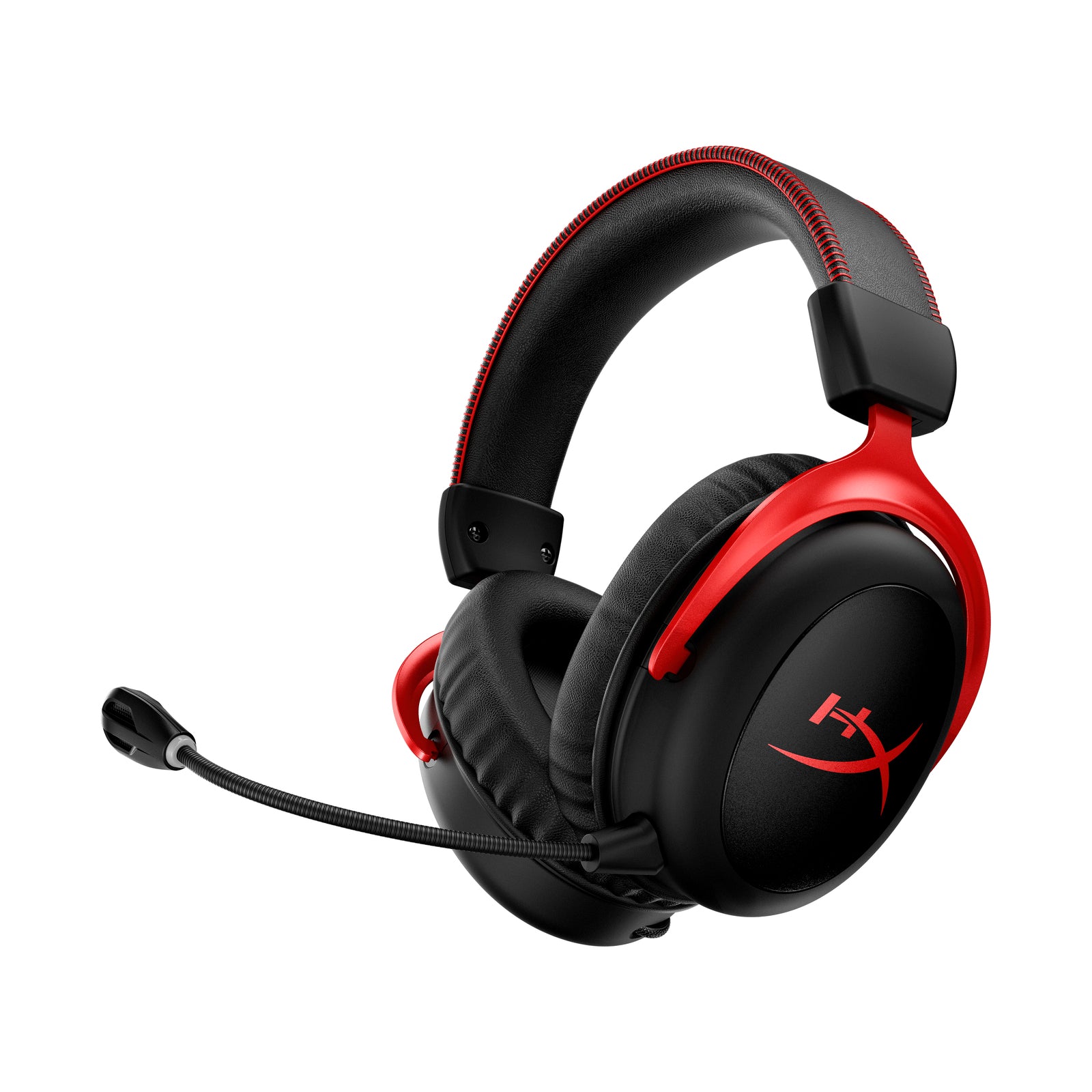
Almost every gaming headset sold today — including both models we've reviewed on this site, the SteelSeries Arctis Nova Pro Wireless and the HyperX Cloud II Wireless — uses a closed-back design, where the ear cups are sealed with solid material on the outside. That's not an accident of the gaming category; it's a deliberate acoustic trade-off. Open-back headphones, which use a perforated or mesh-backed ear cup that lets air and sound pass through freely, sit on the other side of that trade-off, and understanding what each design actually does explains why one dominates gaming and streaming setups while the other remains a niche favorite for critical listening.
How the physical design changes the sound
A closed-back ear cup seals the driver in a small enclosed air chamber. That enclosure reflects sound back toward your ear, which reinforces bass response and blocks a meaningful amount of outside noise from getting in — and just as importantly, blocks your audio from leaking out to people around you. The trade-off is that reflected sound inside a sealed chamber can create a slightly boxier, more compressed soundstage, since the sound has nowhere to go but back at your eardrum. An open-back design removes that enclosure almost entirely: sound waves pass through the back of the ear cup instead of reflecting, which produces a wider, more natural-feeling soundstage and reduces the pressure buildup that can make long closed-back sessions feel fatiguing. The cost is that open-back designs leak sound in both directions — you'll hear more of your room, and your room will hear more of your audio.
Why closed-back wins for gaming and calls
The isolation that closed-back designs provide isn't just about comfort — it directly affects two things gaming and work headsets are built around: spatial audio accuracy in noisy environments and microphone performance during calls. A sealed ear cup blocks enough ambient room noise that positional audio cues (footsteps, off-screen gunfire, directional callouts) stay clearer against a quiet background, which is a meaningful competitive advantage in shooters. It also prevents your own headset audio from bleeding into an open microphone during calls or streams, which is exactly the kind of leakage an open-back design would introduce. That's the core reason every headset in our current lineup, including the closed-back sealed ear cup design used by both the Arctis Nova Pro Wireless and Cloud II Wireless, takes this approach rather than an open one — for gaming, streaming, and video calls, isolation is doing real functional work, not just blocking distractions.
Where open-back still makes sense
Open-back headphones remain the preferred choice for critical music listening, mixing, and mastering, where the more natural, spacious soundstage and reduced in-ear pressure outweigh the lack of isolation. They're best suited to quiet, private environments — a home studio or a quiet room where sound leakage doesn't bother anyone else and ambient noise isn't loud enough to compete with the audio. For a desk setup shared with roommates, family, or open-plan coworkers, or for anyone taking calls regularly, that leakage becomes a practical dealbreaker rather than a minor compromise, which is exactly why open-back designs are rare outside of dedicated listening setups and largely absent from gaming and productivity headset lineups entirely.
Comfort and clamping force differences
Beyond the acoustic differences, the two designs often feel different on the head during long sessions. Closed-back ear cups trap heat and can feel warmer over multi-hour use, which is part of why premium closed-back headsets increasingly use breathable memory foam or fabric-covered cushions rather than pleather to offset the lack of airflow. Open-back designs, by contrast, breathe naturally because air moves through the cup itself, generally staying cooler over long sessions even with similar padding. Clamping force — how tightly the headband squeezes the ear cups against your head — is independent of open versus closed design, but it interacts with both: too much clamping force on a closed-back set compounds heat buildup, while the same clamping force on an open-back set is less noticeable since heat isn't trapped in the first place.
Wireless considerations
The wireless features that matter for a desk setup — low-latency 2.4GHz dongles, Bluetooth multipoint pairing, active noise cancellation — are almost exclusively built around closed-back designs, in part because active noise cancellation physically requires the sealed chamber that closed-back headphones provide to work effectively; open-back headphones can't meaningfully implement ANC because the whole point of the design is to not seal against outside sound. If wireless convenience and noise cancellation are priorities, that alone effectively narrows the field to closed-back options like the dual-battery Arctis Nova Pro Wireless, which pairs active noise cancellation with 2.4GHz low-latency wireless specifically because the closed-back seal makes both features possible.
Which one should you actually buy
For anyone gaming, taking calls, streaming, or sharing a room or office with other people, closed-back is the practical choice — full stop. The isolation, leak prevention, and ANC compatibility all matter more day to day than the modestly wider soundstage open-back designs offer. If your desk setup is dedicated purely to music production, mixing, or critical listening in a private space where sound leakage genuinely doesn't matter to anyone else, an open-back pair is worth seeking out specifically for that wider, more natural sound signature — but it would be a second headphone alongside a closed-back set for everything else, not a replacement for it. For a broader look at choosing between wired and wireless designs generally, our headset buying guide covers the rest of the decision tree.
Passive isolation versus active noise cancellation
It's worth separating two related but different things: the passive isolation a closed-back shell provides just by sitting over your ears, and active noise cancellation (ANC), which uses microphones and an onboard processor to actively cancel out ambient sound waves. Passive isolation on a well-sealed closed-back headset already blocks a meaningful amount of mid- and high-frequency noise — typing, nearby conversation, a fan — simply through the physical barrier of the ear cup and cushion. ANC adds a second layer on top of that, specifically targeting the low-frequency, steady-state noise passive isolation struggles with most, like HVAC hum or a distant appliance. Neither works at all without the sealed chamber a closed-back design provides, which is the underlying reason ANC and open-back designs are fundamentally incompatible rather than just an engineering choice manufacturers haven't gotten around to yet.