Headset Drivers and Soundstage Explained: What Actually Makes Gaming Audio Good
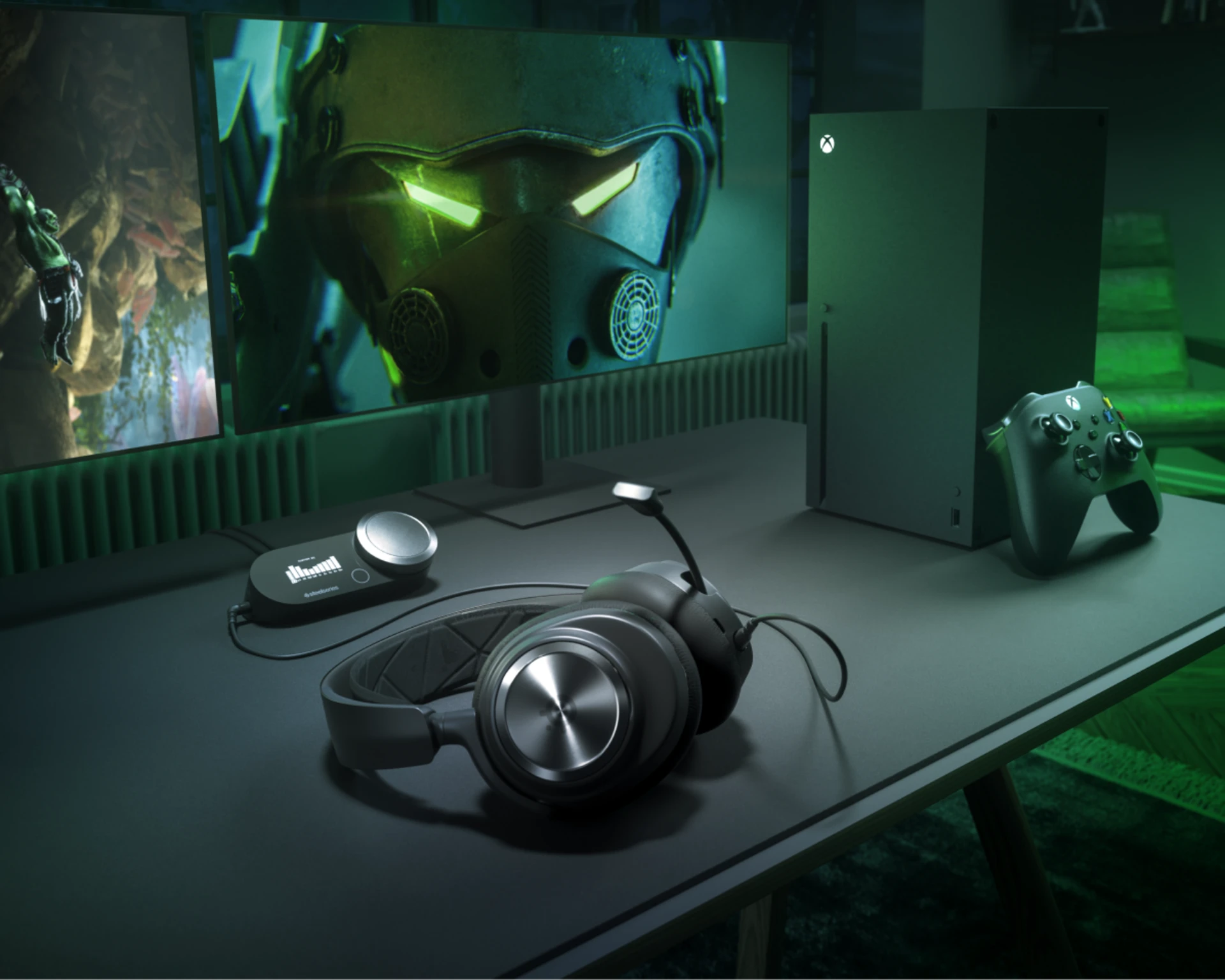
Headset marketing throws around driver sizes and "360-degree soundstage" claims constantly, but the actual relationship between a driver and what you hear is more nuanced than "bigger driver equals better sound." A closer look at how headset drivers generate audio and how virtual soundstage processing tries to recreate spatial positioning explains why two headsets with near-identical driver specs can sound completely different, and why the driver size on the spec sheet is one of the least reliable ways to predict audio quality.
What a driver actually is
A headset driver is a small speaker: a diaphragm that vibrates to push air and create sound waves, driven by a voice coil reacting to an electrical audio signal inside a magnetic field. Most gaming headsets use dynamic drivers, the same basic design found in traditional speakers, typically ranging from around 40mm down to 30mm or smaller depending on the headset's form factor. The diaphragm material, the magnet strength, and the precision of the surrounding acoustic chamber all affect how accurately that driver reproduces sound — which is why driver diameter alone tells you almost nothing about tuning quality, frequency response, or distortion at volume.
Why bigger drivers aren't automatically better
Larger drivers can move more air, which theoretically helps with deep bass extension, but a larger diaphragm is also harder to control precisely at high frequencies, and a poorly tuned large driver will sound muddier than a well-tuned smaller one. What actually determines perceived sound quality is the combination of driver design, the acoustic chamber it sits in, and the DSP (digital signal processing) tuning applied to the signal before it reaches your ears. This is why a premium headset with a 40mm driver, like the SteelSeries Arctis Nova Pro Wireless, can sound noticeably more balanced and detailed than a budget headset with an identical driver size — the difference lives in tuning and chamber design, not the number printed on the box.
What "soundstage" actually means
Soundstage describes how well a headset lets you perceive the position and distance of individual sound sources — footsteps to your left, gunfire behind you, dialogue centered in front of you — rather than everything collapsing into a flat wall of sound directly against your ears. Headphones have an inherent soundstage disadvantage versus speakers: drivers sitting a few millimeters from your eardrums don't naturally recreate the way sound reflects off walls and reaches each ear at slightly different times the way a room full of speakers does. Open-back headphones have a genuine physical soundstage advantage here because their design lets air (and sound) pass through the back of the driver rather than reflecting inside a sealed cup — our open-back vs. closed-back guide covers that trade-off directly.
Virtual surround: simulating what the drivers can't
Because most gaming headsets use two drivers (one per ear) rather than the multiple physical drivers found in true surround-sound headsets, most "7.1 surround sound" or spatial audio features on gaming headsets are virtual — software-processed using head-related transfer functions (HRTFs) that simulate how sound would reach each ear from different directions, then blend that into the stereo signal each driver actually plays. Done well, this genuinely improves directional awareness in competitive games, making it meaningfully easier to place an opponent's footsteps by ear. Done poorly, aggressive virtual surround processing can smear the frequency response and make the underlying driver quality sound worse than it actually is, which is part of why some competitive players deliberately turn virtual surround off in favor of a clean stereo signal.
DAC quality and amplification matter as much as the driver
A driver is only as good as the signal driving it. A headset's DAC (digital-to-analog converter) and internal amplifier determine how cleanly the digital audio signal gets converted and how much power reaches the driver, and a underpowered amp will make even a well-tuned driver sound flat and lifeless. This is a major reason premium wireless headsets bundle a dedicated USB transmitter or base station with its own DAC and amp stage rather than relying on a phone or laptop's built-in audio hardware — it's not a wireless-range feature so much as a sound-quality one, delivering a consistently powered signal that a device's internal audio chip often can't match.
Planar magnetic drivers: the alternative most gaming headsets skip
A smaller number of premium headsets use planar magnetic drivers instead of the dynamic drivers described above. Rather than a single voice coil moving a cone-shaped diaphragm, a planar magnetic driver spreads a thin conductive film across a flat diaphragm surrounded by magnets, driving the entire surface evenly rather than from a single point. This generally produces lower distortion and a more consistent frequency response across the diaphragm, at the cost of a heavier driver assembly and a noticeably higher manufacturing cost, which is why planar magnetic drivers remain rare outside audiophile-oriented and high-end gaming headsets rather than becoming a mainstream standard. Most gaming headsets stick with dynamic drivers because they're lighter, cheaper to produce well, and — when properly tuned — close enough in perceived quality for the vast majority of listeners to make the added cost of planar magnetic hard to justify.
Frequency response: the number that actually correlates with sound
If there's one spec worth paying more attention to than driver size, it's frequency response — the range of pitches (measured in Hz, from low bass to high treble) a headset can reproduce, along with how flat or "colored" that response is across the range. A headset tuned with an exaggerated bass boost will measure impressively on paper but can muddy footstep detail in competitive games, while a flatter, more neutral tuning tends to reveal more positional detail at the cost of feeling less "punchy" out of the box. Budget headsets, including reliable value picks like the HyperX Cloud II Wireless, often ship with a warmer, bass-forward tuning that's pleasant for music and movies but slightly less precise for pinpointing distant in-game sounds than a more neutral-tuned premium set.
What actually matters when you're buying
Treat driver size as one input among several, not the deciding factor. A headset's acoustic chamber design, DSP tuning, DAC quality, and open-back versus closed-back construction all shape the final sound more than the millimeter figure on the spec sheet. If competitive positional audio is the priority, look for genuine open-back or well-implemented virtual surround with a flat-leaning frequency response; if all-around comfort for calls, music, and casual gaming is the goal, a warmer-tuned closed-back set will usually feel more immediately satisfying. Our headset buying guide walks through the rest of the decision, from wired versus wireless to microphone quality.